Showing posts with label The Venue 1550. Show all posts

Friday, March 7, 2014

“The Lady Eve” 5th film in Screwball Comedy series screened March 11, 2014

When: Tuesday, March 11, 2014 6:30 p.m.
Where: The Venue 1550 at the Daystar Center, 1550 S. State Street

The Lady Eve (1941) Father and daughter con artists (Charles Coburn and Barbara Stanwyck) travel on transatlantic cruise ships swindling rich passengers in card games. When the two spot a big fish Charles Poncefort Pike (Henry Fonda), heir to Pike Ale—“The ale that won for Yale”—they decide to take him for all he’s worth. But when the daughter falls in love with their mark, things get complicated and hilarious. Preston Sturges directed his first big-budget hit with with amazing results. A critical and financial success, the New York Times declared The Lady Eve the best picture of 1941, above Citizen Kane! Once you see this film you’ll understand why they came to that amazing conclusion.

This was Preston Sturges’s third film as both writer and director and his first big-budget production, with A-list movie stars. After the critical and financial successes of The Great McGinty and Christmas in July, both released in 1940, Paramount gave Sturges free rein to craft The Lady Eve. For his leads, Sturges got Stanwyck and Fonda. From all accounts, both stars enjoyed working with each other and with Sturges. Sturges wrote The Lady Eve with Stanwyck in mind after he saw her performance in Remember the Night the year before. Sturges was so impressed with her characterization in that film that he knew she would be ideal as Eve.

Fonda, who had four films in release in 1940, including The Grapes of Wrath, was happy to star in a comedy. As Charles Pike, Fonda showed his lighter side, being especially deft at physical comedy. Fonda’s numerous pratfalls are one of the film’s major delights. Bosley Crowther in theNew York Times said, “No one could possibly have suspected the dry and somewhat ponderous comic talent which is exhibited by Henry Fonda as the rich young man.” As Eve, Stanwyck is one part of a trio of card sharks mixing it up with rich swells, like Pike, traveling by ocean liner. Along with her father, “Colonel” Harrington (Charles Coburn) and their “butler” Gerald (Melvin Cooper), Eve sees Pike as an easy mark.


A publicity shot during the filming of The Lady Eve

The Lady Eve is filled with a host of great character actors, most of which became part of the “Sturges Stock Company.” This stock company included William Demarest, Eric Blore, and Robert Grieg. The latter two appeared in Sturges’s Sullivan’s Travels, also released in 1941.

When the movie was opened, Crowther, declared Sturges, “the most refreshing new force to hit the American motion pictures in the past five years.” He went on to say that a “more charming or distinguished gem of nonsense has not occurred since It Happened One Night.”

The Lady Eve is not only one of the best screwball comedies, but one of the best American films ever made.

Henry Fonda said Barbara Stanwyck was his favorite leading lady.

Backstory: Preston Sturges wrote the screenplay for Remember the Night with Carole Lombard in mind. He was disappointed that Paramount didn't secure her services, but when he saw Stanwyck in the lead, he was impressed. Stanwyck told Sturges that no one writes comedies for her. Sturges said he would write one for her; that screenplay was The Lady Eve.

Join the Chicago Film club, join the discussion
The Chicago Film Club is for classic movie fans. Once a month we screen a classic film and have a brief discussion afterward. For more information, including how to join (it’s free), click hereTickets are $5 general admission; $3 for students and seniors.To purchase your ticket in advance, click here. The Venue 1550 is easily accessible by the CTA. Please visit Transit Chicago for more information on transportation options.


Saturday, February 8, 2014

“Bringing Up Baby” 4th film in Screwball Comedy classic screened February 11, 2014

When: Tuesday, February 11, 2014 6:30 p.m.
Where: The Venue 1550 at the Daystar Center, 1550 S. State Street

Today Bringing Up Baby starring Katharine Hepburn and Cary Grant is considered a classic. In June 2000, the comedy classic came in at number 14 in the American Film Institute’s (AFI) 100 Years…100 Laughs list. Upon it’s initial release, it’s success was spotty. It played at New York’s Radio City Music Hall for only one week; it was quickly replaced by Jezebel starring Bette Davis. Reviews were mixed, with some of the harshest criticism coming from Frank S. Nugent of The New York Times. Nugent said “Miss Hepburn has a role which calls for her to be breathless, senseless, and terribly, terribly fatiguing. She succeeds, and we can be callous enough to hint it is not entirely a matter of performance.”

The tale of Susan Vance (Hepburn) and her infatuation with paleontologist, David Huxley (Grant) is one that is fast-moving, hilarious, and exhausting! The dialogue is snappy and spirited, as are the antics of Hepburn and Grant, who get to show off their talents for physical comedy. Director Howard Hawks initially considered Carole Lombard, but Hepburn was eventually given the female lead. The male lead was offered to Robert Montgomery, Fredric March and Ray Milland. They all turned it down. Grant having gained new-found fame after his star turn in The Awful Truth, was reluctant to play a scientist, but eventually used the opportunity to renegotiate his non-exclusive contract with RKO, the studio producing the film (Grant made more money than top-billed Hepburn).
Katharine Heburn, Skippy, and Cary Grant

Having had a run of several disappointing pictures, while under contract to RKO, Hepburn’s movie career was in decline. Before Bringing Up Baby’s release, Hepburn was declared box-office poison by the Independent Theatre Owners of America. After Baby’s release, Hepburn returned to the stage and wouldn’t make a movie for two whole years. Grant on the other hand was moving up in the world and was a fan favorite. In 1940, Hepburn triumphantly returned to the screen in The Philadelphia Story, costarring Grant and James Stewart.


Backstory: Besides leads, Hepburn and Grant, Baby is populated with a wonderful collection of character actors, including Charlie Ruggles, May Robson, Walter Catlett, and Barry Fitzgerald. And Skippy the dog, who had supporting roles in The Thin Man Movies and The Awful Truth, barks his way through another classic film.

Have some Joe and Enjoy the Show!
Before the movie, grab a cup of coffee from Overflow Coffee Bar, located within the Daystar Center. You can bring food and beverages into the auditorium; we even have small tables set up next to some of the seats.

Join the Chicago Film club, join the discussion
The Chicago Film Club is for classic movie fans. Once a month we screen a classic film and have a brief discussion afterward. For more information, including how to join (it’s free), click here.To purchase your ticket in advance, click here. The Venue 1550 is easily accessible by the CTA. Please visit Transit Chicago for more information on transportation options.

Friday, January 24, 2014

GSLA Community Update Meeting Saturday, January 25

The Greater South Loop Association will be holding a community update meeting, Saturday, January 25, 2014, 9 a.m. – 10:30 a.m., at “The Venue” at the Daystar Center, 1550 S. State St.

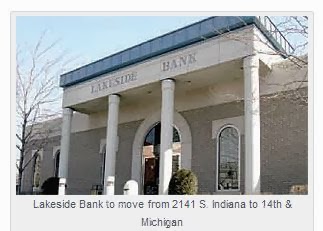
The meeting will include aldermanic updates and information on Lakeside Bank’s new location presentation to the community. Meet and greet begins at 9 a.m., with the meeting beginning promptly at 9:30 a.m.

For more information, visit the GSLA Web site.

Sunday, January 5, 2014

The Chicago Film Club screens “The Awful Truth” January 14, 2014

Irene Dunne and Cary Grant in The Awful Truth
The Chicago Film Club will present The Awful Truth starring Irene Dunne and Cary Grant at The Venue 1550 at the Daystar Center, 1550 S. State St., January 14, 2014. Show time is 6:30 p.m., followed by a brief discussion.


In 1937, Irene Dunne was at the height of her career. The year before, Dunne received a Best Actress Academy Award nomination for Theodora Goes Wild, a comedy role she was reluctant to take. Not only was that picture a critical success for Dunne, but a huge box office hit for Columbia Pictures. So it wasn’t a surprise that the next picture she would make for the studio would be another comedy.

The Awful Truth open at Radio City Music Hall
in November 1937.
From Stage To Screen
The Awful Truth was based on a play by Arthur Richman and brought to the screen with the aid of screenwriter Vina Delmar and Theodora Goes Wild screenwriter, Sidney Buchman, who went uncredited. Teamed with Dunne for the first time was Cary Grant. Grant was quickly becoming a top leading man in Hollywood, but his pairing with Dunne was inspired and their on-screen chemistry delighted movie-going audiences. B.R. Crisler writing in his New York Times review said, “Miss Dunne and Mr. Grant, as the couple...have fun with their roles, and the pleasure seems to be shared, on the whole, by the [Radio City] Music Hall audience.”

What Is The Awful Truth?
The plot revolves around the marital woes of Lucy (Dunne) and Jerry (Grant) Warriner. Each becomes suspicious of the other, which eventually leads them to divorce court. After the divorce, Lucy and Jerry are consumed with foiling each other’s new romantic interests. Is the awful truth the fact that Lucy and Jerry are still in love?

Dunne and Grant go to court over their dog, Mr. Smith.
Get Me Out Of This Picture
Like Dunne in the previous year’s Theodora Goes Wild, Grant wasn’t too happy working on this film.
Director Leo McCarey’s working style didn’t sit well with Grant and he tried to get out of the movie, even going so far as requesting he swap roles with supporting player Ralph Bellamy! McCarey liked to get spontaneous performances out of his cast, which meant a lot of on-set improvising, which Grant found unsettling. Eventually things worked out for all concerned. Ironically, this is the movie that catapulted Grant to superstar status and is responsible for the Grant movie persona.

Comedy Triumph
For Dunne, The Awful Truth was a delightful experience. She loved working with both McCarey (who became a personal friend) and Grant. Professionally, it was another triumph. Once again, the critics raved about her and the film. And once again she was nominated for Best Actress by the Motion Picture Academy. If there was any doubt about Dunne’s comedy chops, they were all dispelled when the film was first released on October 21, 1937. Dunne and Grant would go on to star in two other popular films: the comedy My Favorite Wife (1940) and the melodrama Penny Serenade (1941).

Award Winner
The Awful Truth was nominated for six Academy Awards, including Best Picture, Best Director, Best Screenplay, and Best Supporting Actor. McCarey won the only Oscar for his direction.

Lasting Legacy
In 2000, the American Film Institute listed The Awful Truth at #68 on its list of 100 Years…100 Laughs. In 2002, the AFI listed it at #77 on the 100 Years…100 Passions list.

Backstory: Mr. Smith, the Warriner’s dog in The Awful Truth, was more famous as Asta, the pet of Nick and Nora Charles (William Powell and Myrna Loy) from The Thin Man movies. This talented pet’s real name was Skippy.

Come early and enjoy delicious food and beverages at Overflow Coffee Bar. Mention the Film Club and get 50% off a beverage with the purchase of any food item. Stay on top of all the Chicago Film Club screenings by joining their Meetup page. It’s free to join!


Daystar Center located at 1550 S. State St. works through a grassroots network of collaborations and partnerships with individuals and other nonprofit organizations. Through this web, they’re able to provide educational, cultural, and civic activities that enrich and empower their clients, guests, and community members. To learn more about classes and events offered at the Daystar Center, please visit their Web site.

Monday, November 26, 2012

Film Club to screen Marilyn Monroe classic “Some Like It Hot” December 13, 2012


The comedy classic Some Like It Hot will be screened December 13, 2012 at 7 p.m. at The Venue 1550. The Venue 1550 is located at the Daystar Center, 1550 S. State St., Chicago. Hosted by Stephen Reginald, the current Film Club series features classic films having connections with Chicago. Reginald will introduce each film giving background information before screenings, with Q & A afterwards.


Some Like It Hot (1959)—Directed by Billy Wilder and starring Marilyn Monroe, Tony Curtis, and Jack Lemmon, this classic was voted funniest film of all time by the American Film Institute. Curtis and Lemmon play Chicago musicians who accidentally witness the Saint Valentine’s Day massacre of 1929. The men disguise themselves as women and travel south with Sweet Sue’s all-girl band in an attempt to avoid “Spats” Colombo and his gang who are determined to kill them. Monroe—the band’s vocalist—and the “girls” become bosom buddies along the way, which leads to some hilarious situations and unusual conclusions.

Tony Curtis as Josephine and Jack Lemmon as Daphne
The plot thickens
To escape “Spats” Columbo and his gang, Joe and Jerry (Curtis and Lemmon) disguise themselves as women and join an all-girl band traveling by train to Florida. Masquerading as Josephine and Daphne, Curtis and Lemmon somehow fool bandleader Sweet Sue and band-manager Beinstock, who are desperate to round out their jazz band.


Underneath the sheltering palms
Marilyn Monroe as Sugar Kane 
On the train ride to Florida, Josephine and Daphne meet Sugar Kane Kowalczyk (Marilyn Monroe). Things get complicated when Joe-Josephine starts to fall in love with Sugar. With amazing energy and dexterity, Joe-Josephine manages to assume the identity of Junior, heir to the Shell Oil fortune, in order to woo Sugar and then switches back to play with Sweet Sue and Her Society Syncopaters, to hide out from the Columbo gang. All this switching back and forth makes Daphne’s (Lemmon’s ) head spin. But Daphne has her own problems. The rich, much-married Osgood Fielding III finds Daphne irresistible and proposes. What’s a nice “girl” like Daphne to do?

With more twists and turns than a roller coaster, Some Like It Hot boasts memorable performance from the three leads and was voted the number one comedy film of all time by the American Film Institute (AFI).

Admission is $7 per person. Tickets purchased at the door.

Reginald is a freelance writer/editor and popular instructor at Facets Film School in Chicago. He was also the original host of Meet Me at the Movies.

Thursday, November 1, 2012

Classic screwball comedy “His Girl Friday” coming to “The Venue 1550” November 8


The comedy classic His Girl Friday (1940 ) will be screened at “The Venue 1550” at the Daystar Center, 1550 S. State St., November 8, 2012 at 7 p.m. Tickets are $7 per person and can be purchased at the door or online.

His Girl Friday, directed by Howard Hawks and starring Cary Grant and Rosalind Russell is an adaptation of the Ben Hecht and Charles MacArthur classic Broadway smash, The Front Page. Grant plays Walter Burns, a Chicago newspaper managing editor and Russell is Hildy Johnson an ex-reporter for the same paper and Burns’s ex-wife. On the eve of her marriage to a new man, Burns tries to convince Hildy to come back to the paper and him. Considered one of the greatest classic screwball comedies of all time, His Girl Friday is filled with non-stop one liners and the fastest dialogue ever recorded on film.

Backstory
Carole Lombard was first choice
to play Hildy Johnson
Howard Hawks originally planned to do a straight remake of The Front Page. During a read-through of the script during auditions, Hawks had his secretary read Hildy Johnson’s lines. Hawks, always a champion of strong women, liked the sound of Johnson’s lines coming out of the mouth of a female. The script was changed to make Hildy the ex-wife of Walter Burns and many think His Girl Friday is better than the film on which it is based.

Casting Call
Hawks had Cary Grant in mind for Walter Burns from the start, but the casting of Hildy Johnson proved problematic. Hawks originally wanted Carole Lombard, who he directed in Twentieth Century (1934). Lombard, one of the biggest stars in Hollywood, was too expensive. Supposedly the role of Hildy was offered to Katherine Hepburn, Claudette Colbert, Margaret Sullivan, Ginger Rogers, and Irene Dunne. All turned the role down. Joan Crawford, coming off her success in The Women, (1939) was even considered. Hawks finally settled on Rosalind Russell. Hawks encouraged ad-libbing on the set, so Russell hired a writer to punch up her dialogue because she thought Grant had all the good lines.


Ralph Bellamy, Cary Grant, and Rosalind Russell
His Girl Friday was #19 on American Film Institute's 100 Years…100 Laughs and has been selected for preservation in the United States National Film Registry.


Join the Film Club
Come watch this classic in the comfort of “The Venue 1550.” Overflow Coffee Bar will be open so you can grab a drink or snack to be enjoyed during the movie.


Related Posts Plugin for WordPress, Blogger...